2003 wasn’t just the last time I had any artwork published. It was also the last (and only) time I had any work in an exhibition. The piece was my final major project at university and the exhibition at The Old Truman Brewery in London involved everybody who graduated that year, but it still counts!
Despite studying graphic design, I spent all of my final year working in video. I dedicated the year to exploring our relationship with the cinema screen and investigating why cinema and TV hadn’t really evolved beyond the flat rectangle. It was the focus of my dissertation and all of my projects that year and culminated in the work we are talking about now.
Cinema had some major leaps in the early part of the 20th century – sound, colour, widescreen. But after that there were no dramatic changes, at least in terms of the viewer experience. 3-D kept popping up and then swiftly going again. In fact, in my 2003 dissertation I declared 3-D dead and buried. Then in 2009 Avatar came out, some people were conned into buying ludicrously expensive 3-D glasses for their home TV and swiftly afterwards 3-D disappeared again. Maybe we’ll try again in a few years time.
So I concluded, correctly I think, that cinema is unlikely to evolve beyond a flat rectangle on a wall because it already has the power to immerse us in stories and transport us to other worlds. The tech companies may have invested way too much money into VR and have been trying to convince us that is the future instead, but even most VR seems to create a virtual big rectangle for you to watch a film on. Hell, in 2003 I couldn’t really have predicted that lots of people on your train will be watching films and TV on small flat rectangles. Flat rectangles are all you need.
So what does this all have to do with my only ever exhibition? Whilst writing 10,000 words on this guff, I was also thinking about how I would incorporate this research into a piece of art. I wrote a proposal for a video installation inside a World War II pillbox next to a railway track that used projections to simulate it getting overgrown with vegetation and the vegetation receded every time a train went past, triggered by a motion sensor. This was frankly outside of both my budget and skills at the time, but it was an intriguing concept none-the-less.
Then I moved onto another idea – what if I made it look like there were little people living in the skirting boards? I liked it and ran with it. Eventually, I settled on using multiple projectors to create a small everyday street scene.
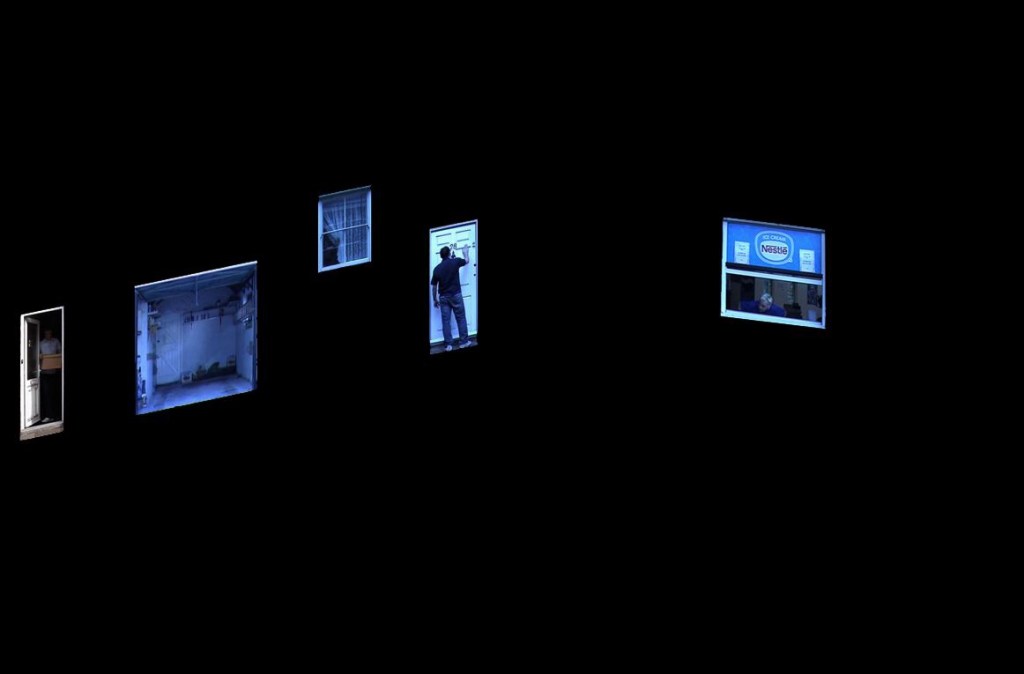
At one house a man is clearing out his garage, at another is a man begging to be let back in after being thrown out after an argument whilst his other half looks out of the window, and watching all of this is a bored ice cream seller waiting for customers.
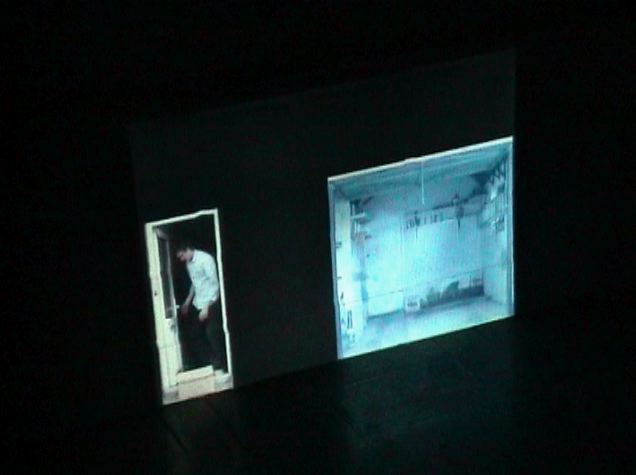
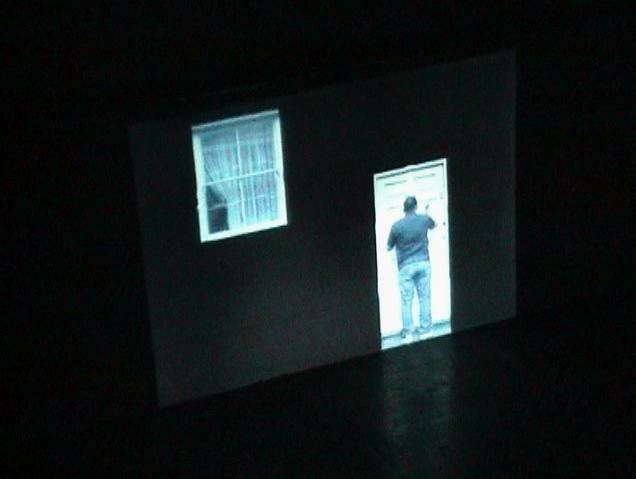
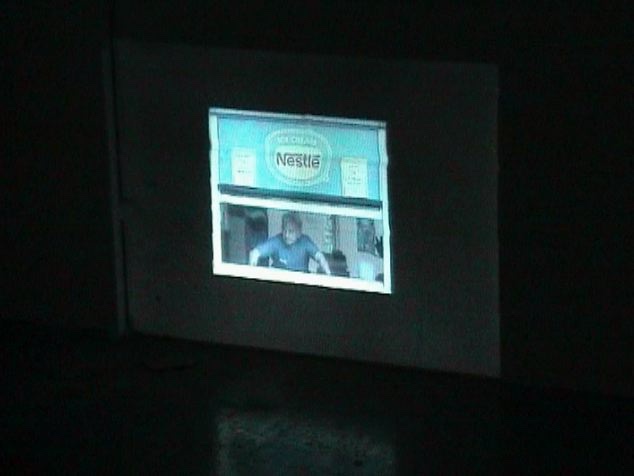
I deliberately left the projectors highly visible right in front of the scenes so that even if the viewer is engrossed in the stories playing out in front of them and can believe are little people living behind the walls, they are forced to be aware that are looking at nothing more than a little rectangles projected on a wall. Little people living in the walls is also a funny idea to me, especially if they normal are all normal people doing mundane everyday things, not little pixies doing magical things.
I was very proud of this whole project which is why I’m still banging on about it now. It was much better than the prototype automated dog kennel I made out of cardboard the year before. I know, they were supposed to be teaching us graphic design! No wonder I don’t do that for living.


 Matt Hart